Maggi | 1962
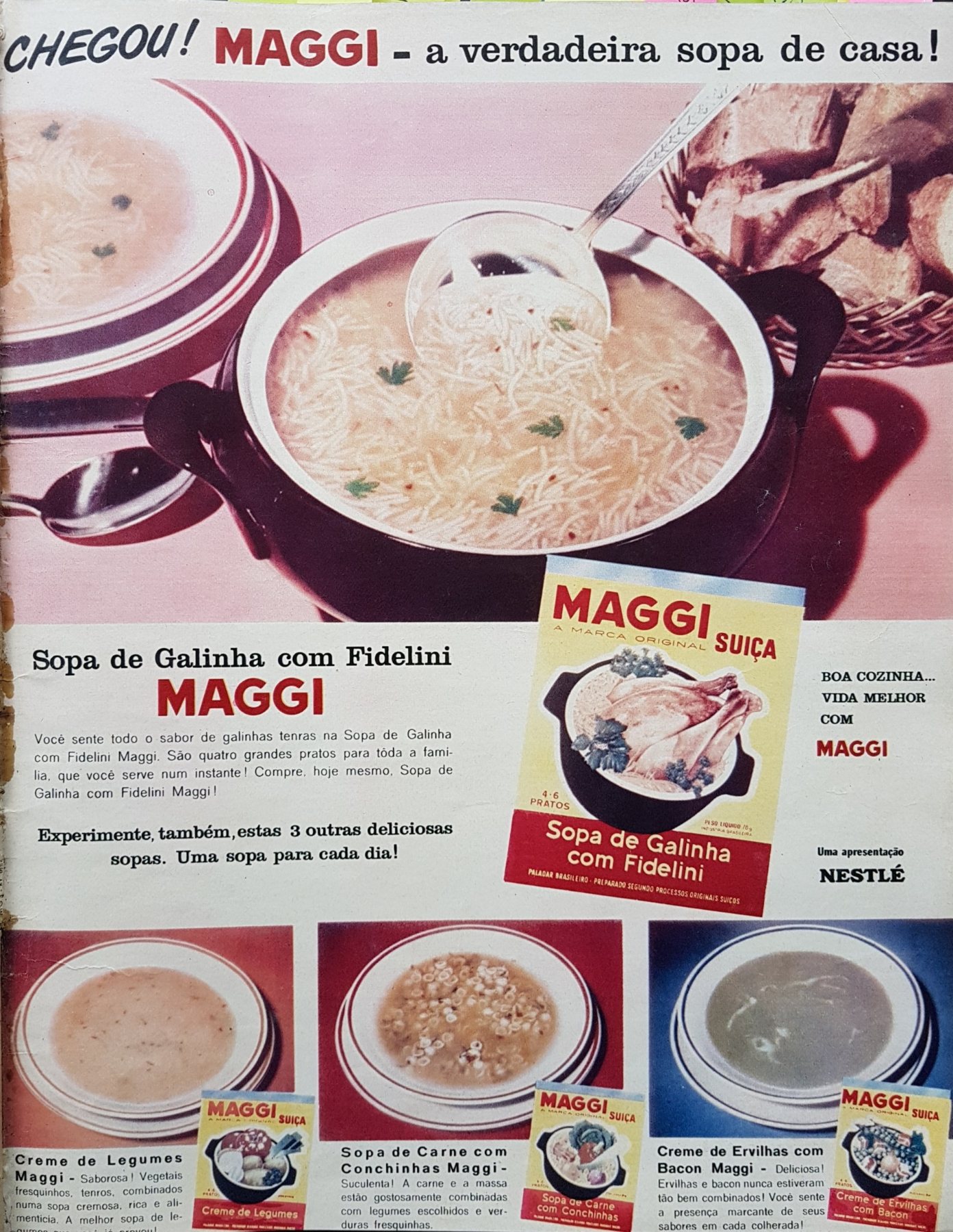
Julius Maggi, a Swiss man who inherited his father’s mill, gave his name to the Maggi brand and in 1886 created his first instant soup.
It was the first of many innovations that changed the way millions of people around the world cook.
In 1947 Maggi became part of Nestlé, which is why this 1960s ad already carries the line “A Nestlé presentation”.
Text in the ad
Chegou! Maggi – a verdadeira sopa de casa!
Sopa de Galinha com Fidelini Maggi
Você sente todo o sabor de galinhas tenras na Sopa de Galinha com Fidelini Maggi. São quatro grandes pratos para tôda a família, que você serve num instante! Compre, hoje mesmo, Sopa de Galinha com Fidelini Maggi!
Experimente, também, estas 3 outras deliciosas sopas. Uma sopa para cada dia!
Creme de Legumes Maggi – Saborosa! Vegetais fresquinhos, tenros, combinados numa sopa cremosa, rica e alimentícia.
Sopa de Carne com Conchinhas Maggi – Suculenta! A carne e a massa estão gostosamente combinadas com legumes escolhidos e verduras fresquinhas.
Creme de Ervilhas com Bacon Maggi – Deliciosa! Ervilhas e bacon nunca estiveram tão bem combinados!
Boa cozinha… vida melhor com Maggi – uma apresentação Nestlé
Translation:
It’s here! Maggi – real home-made soup!
Maggi Chicken Soup with Fidelini
You taste all the flavour of tender chicken in Maggi Chicken Soup with Fidelini. Four big bowls for the whole family, served in an instant! Buy Maggi Chicken Soup with Fidelini today!
Also try these 3 other delicious soups. A soup for every day!
Maggi Cream of Vegetables – Tasty! Fresh, tender vegetables combined in a creamy, rich, nourishing soup.
Maggi Beef Soup with Shells – Hearty! Beef and pasta deliciously combined with choice vegetables and fresh greens.
Maggi Cream of Pea with Bacon – Delicious! Peas and bacon have never been so well matched!
Good cooking… a better life with Maggi – presented by Nestlé
- Brand
- Maggi
- Year
- 1962
- Decade
- 1960s
- Country
- Brazil
- Medium
- Magazine
- Themes
- Food

