Banco Nacional | 1963
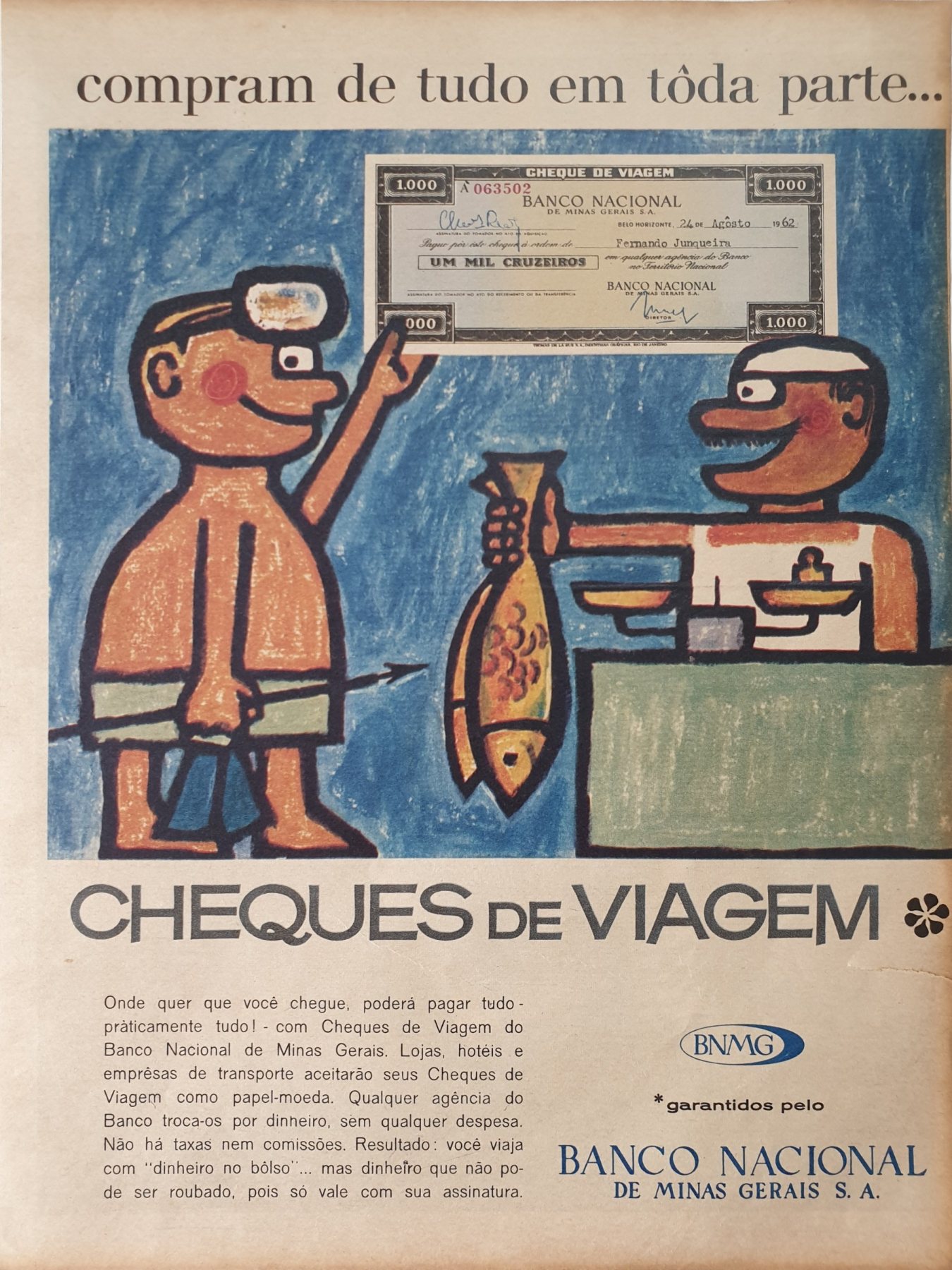
Who remembers traveller’s cheques? Once so common, today they seem part of a distant past.
They were the perfect protection against theft and loss, since they needed the account holder’s signature to be used.
One of the banks offering them was Banco Nacional de Minas Gerais, later simply Banco Nacional.
Founded in Belo Horizonte in 1944 by brothers José and Waldomiro de Magalhães Pinto, the bank ceased to exist in 1995 after financial difficulties and intervention by the Central Bank.
For years it sponsored Formula 1 driver Ayrton Senna (who died in 1994), and many fans still remember its name on his cap and helmet.
Text in the ad
compram de tudo em tôda parte…
Cheques de Viagem*
Onde quer que você chegue, poderá pagar tudo – pràticamente tudo! – com Cheques de Viagem do Banco Nacional de Minas Gerais. Lojas, hotéis e emprêsas de transporte aceitarão seus Cheques de Viagem como papel-moeda. Qualquer agência do Banco troca-os por dinheiro, sem qualquer despesa. Não há taxas nem comissões. Resultado: você viaja com “dinheiro no bôlso”… mas dinheiro que não pode ser roubado, pois só vale com sua assinatura.
*garantidos pelo BNMG – Banco Nacional de Minas Gerais S.A.
Translation:
they buy anything, anywhere…
Travellers’ cheques*
Wherever you go, you can pay for everything – practically everything! – with Banco Nacional de Minas Gerais travellers’ cheques. Shops, hotels and transport companies will accept them like banknotes. Any branch of the bank will exchange them for cash at no cost. No fees, no commissions. The result: you travel with “money in your pocket”… but money that can’t be stolen, because it’s only valid with your signature.
*guaranteed by BNMG – Banco Nacional de Minas Gerais S.A.
- Brand
- Banco Nacional
- Year
- 1963
- Decade
- 1960s
- Country
- Brazil
- Medium
- Magazine
- Themes
- Banking

