Philco-Hitachi | 1990
Anyone who grew up in 1980s Brazil remembers the double name on TVs and stereos: Philco-Hitachi.
Philco was born in Philadelphia, USA, and reached Brazil in 1934 with its “cathedral” radio, known there as the “capelinha”. It opened its first Brazilian factory in Rio de Janeiro in 1948 and produced the country’s first colour televisions in 1972. In 1978 it signed a technical cooperation agreement with Japan’s Hitachi, and during the 1980s its products began leaving the assembly lines under the name Philco-Hitachi.
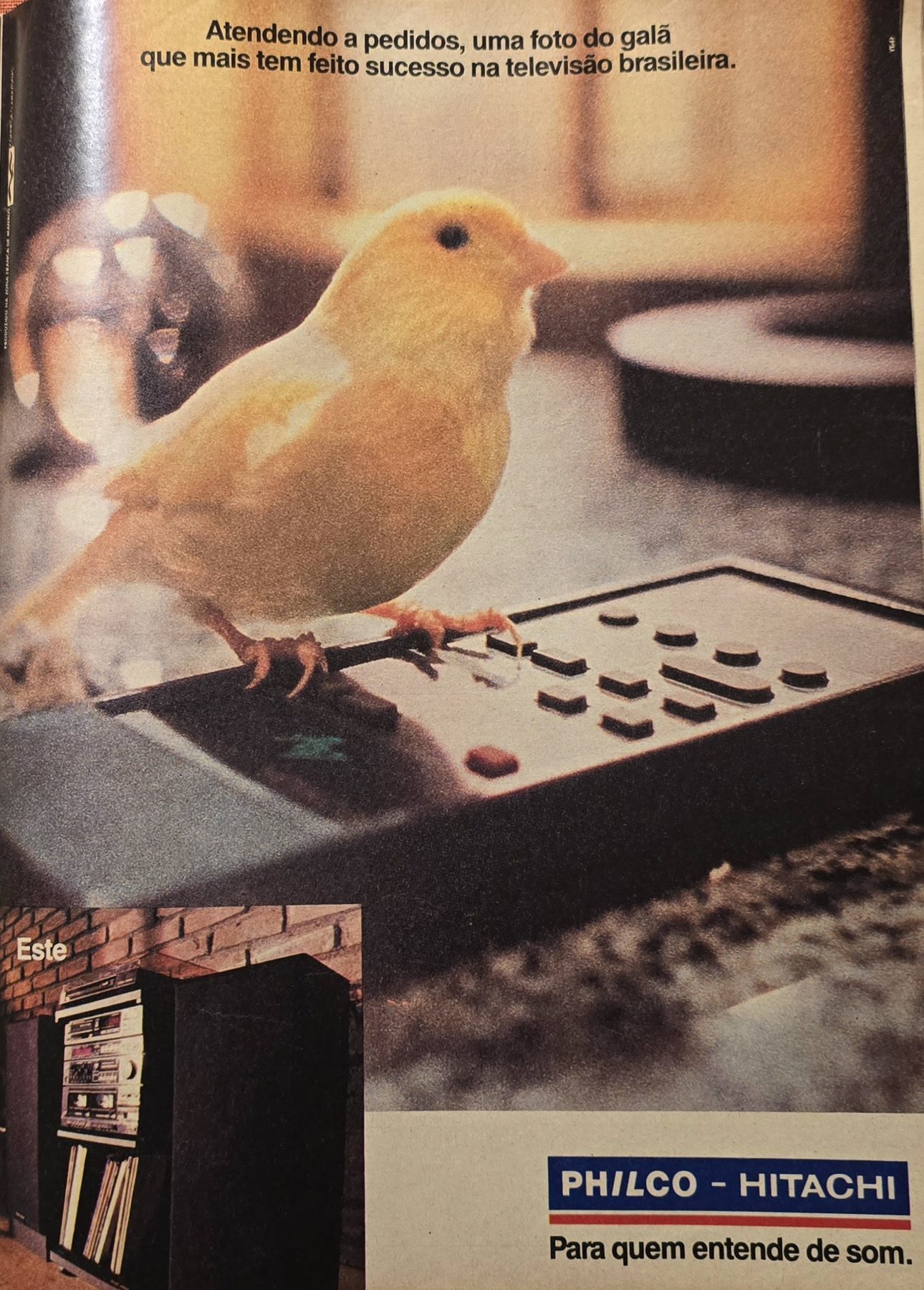
In this ad, the headline promises a photo of “the leading man who has been the biggest hit on Brazilian television”. The heart-throb is a canary perched on a remote control. The stereo in the corner is introduced with a simple “Este” (this one), and the sign-off completes the joke: “Para quem entende de som” (for those who know about sound).
In 1989 control of Philco in Brazil passed to the Itaúsa group. The double name lasted until the mid-1990s, and since 2007 the Philco brand has belonged to Britânia.
Text in the ad
Atendendo a pedidos, uma foto do galã que mais tem feito sucesso na televisão brasileira.
Este
PHILCO - HITACHI
Para quem entende de som.
Produzido na Zona Franca de Manaus
Translation:
By popular demand, a photo of the leading man who has been the biggest hit on Brazilian television.
This one
PHILCO - HITACHI
For those who know about sound.
Made in the Manaus Free Trade Zone
- Brand
- Philco-Hitachi
- Year
- 1990
- Decade
- 1990s
- Country
- Brazil
- Medium
- Magazine
- Themes
- Technology
- Original publication
- Veja, n.º 1.162, 26 de dezembro de 1990
